
A personal alarm that works wherever you do

LESS THAN A DOLLAR A DAY for local 24/7 Grade A1 professional monitoring

solosafe is a monitored personal alarm pendant for active seniors and people living with chronic health conditions. One press connects you to our monitoring centre in Perth — at home, in the garden, at the shops or anywhere else with mobile coverage.

It is designed to help you stay in your own home, keep doing what you do, and give your family the reassurance that someone is always there.

solosafe has an inbuilt SIM with access to the full Telstra network, so it works right across Western Australia and every other Australian state.

Monitoring from $30 a month, with no minimum term. See pricing, or speak to our Perth team on (08) 9422 1111.
How solosafe works

One press, and a person answers

  1. Press the button. The alarm reaches our Monitoring Centre in Perth.
  2. An operator speaks to you through the device, and works out what you need.
  3. Help is sent according to the plan you have set with us — family, a carer, or emergency services.

If the operator cannot reach you, they use the device’s GPS to confirm where you are and escalate according to your pre-agreed protocols. On activation, your location updates every 30 seconds until the situation is resolved.

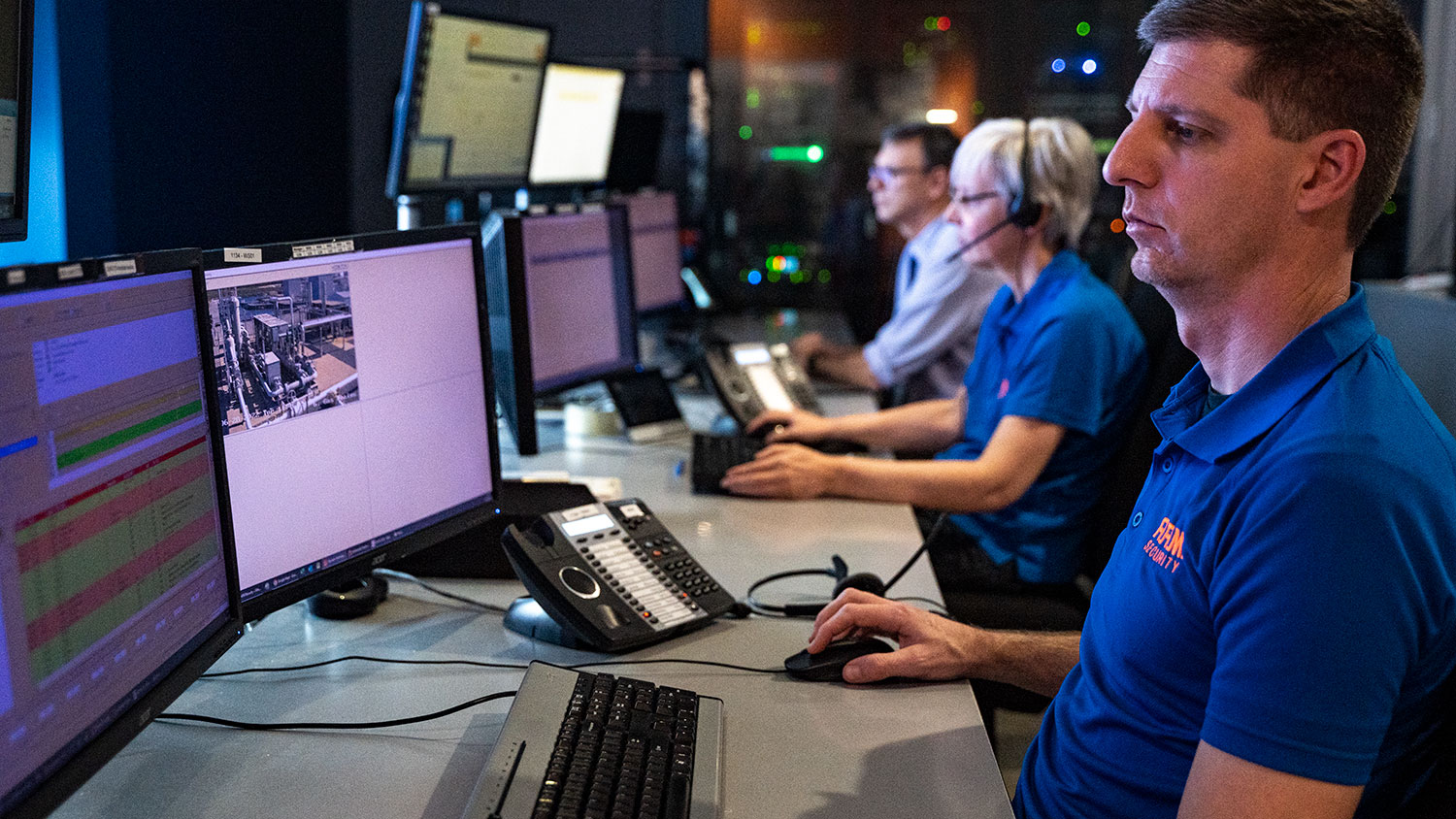
Our operators are in Western Australia, in the ASIAL Grade A1 graded Monitoring Centre operated by our sister company A.R.M. Security — the highest grade of alarm monitoring available in Australia.

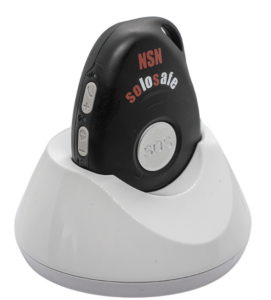
The solosafe pendant

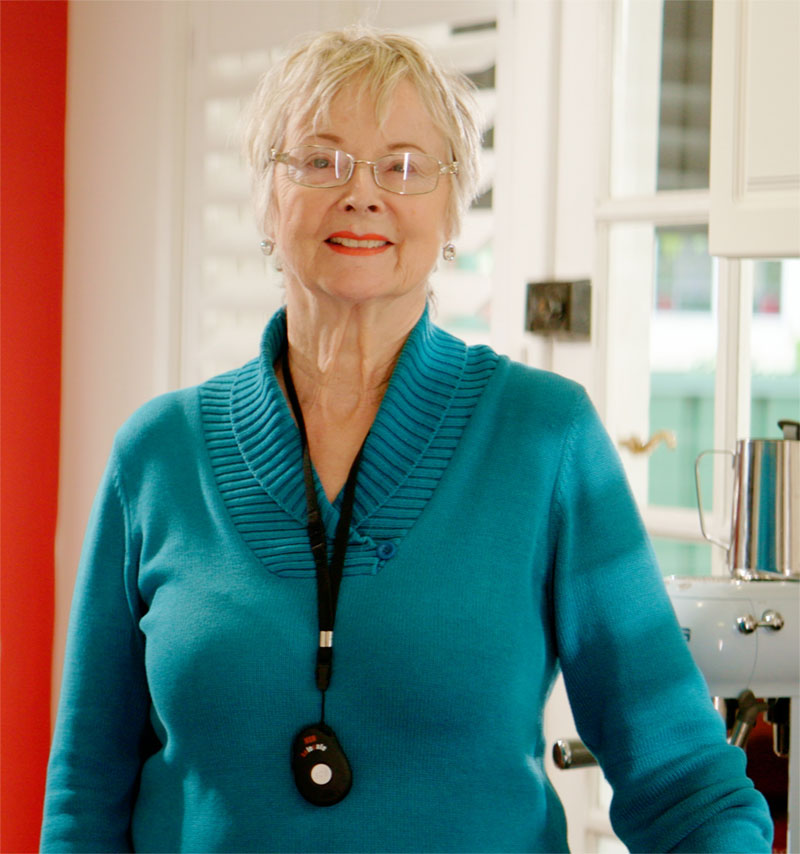
The solosafe pendant is light and compact, and attaches to a keyring, belt clip or lanyard. It can be worn discreetly under clothing and does not get in the way of ordinary activities. It is designed to be carried at all times, inside the home and out.

Features

  • Two-way voice communication with a monitoring operator, 24/7
  • Fall detection — if a fall is detected and the button cannot be pressed, the device raises the alert on its own
  • GPS positioning, so the operator can relay your exact location
  • Accelerated tracking on activation — location updates every 30 seconds
  • Geo-fencing — set a virtual boundary and our operators are alerted the moment it is crossed, then call the family or carer with the wearer’s location
  • Integrated with Google Maps
  • Inbuilt SIM with access to the full Telstra network, across every Australian state
  • Water resistant
  • Low battery SMS sent to up to three nominated people, so the family knows before the wearer does
  • Rechargeable battery — a full charge takes 2 to 3 hours

Also available as a watch

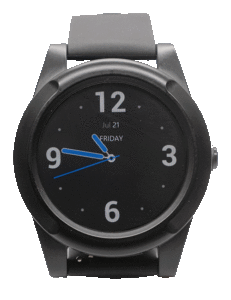
The solosafe watch has all the same features, with a sleek design and an interchangeable, lockable wristband that prevents accidental removal.

Families supporting someone living with dementia, Alzheimer’s or another cognitive condition often prefer the watch for that reason — combined with geo-fencing, it is the option most often chosen where there is a risk of the wearer leaving home unnoticed.

Ask us about the watch when you call.

A note on charging

solosafe has a 24-hour battery and needs charging daily — it sits on its charger overnight, the same way a mobile phone does. A full charge takes 2 to 3 hours. If the battery runs low, an SMS goes to up to three nominated people, so a flat device does not go unnoticed.

If daily charging is likely to be difficult, HomeSafe may suit better — its pendant runs for up to two years without charging at all.

solosafe Pricing

From $30 a monthfor 24/7 professional monitoring

That is the ongoing cost of solosafe — trained operators in our ASIAL Grade A1 Monitoring Centre in Western Australia, ready to answer at any hour of the day or night. Option 1 has no minimum term and you can cancel at any time.

Choose the option that suits Device, one-off cost Monitoring, per month
Option 1 — buy the deviceNo minimum term, cancel any time $199 $30
Option 2 — no upfront cost12-month minimum term Nothing to pay $35

All prices include GST. Pricing shown applies to Western Australia. Available as a pendant or a watch.

You may not need to pay the full cost. Depending on your circumstances, solosafe may be funded through Support at Home, CHSP or your NDIS plan — see the funding options below.

ASIAL Grade A1 Monitoring Centre | ISO Certified | National Security Network member | Monitored in Western Australia | Backed by CTI Logistics (ASX: CLX)

Funding options

Many of our clients pay little or nothing towards solosafe, because a personal alarm is recognised as assistive technology under several government and home care funding programs.

solosafe may be purchased through:

  • NDIS — solosafe costs less than $1,500, which means it may be funded as low-cost assistive technology from a Consumables budget where it meets a disability-related need. Self-managed participants can purchase low-cost assistive technology directly from the provider of their choice and claim through the myplace portal, with no service booking required. Plan-managed participants can arrange payment through their plan manager — we will provide whatever invoice or documentation they need. If your plan is NDIA-managed, you will need to purchase through a registered NDIS provider; we are not registered, so we would not be able to supply you. Whether solosafe is funded depends on your individual plan and assessed needs, so check with your plan manager or support coordinator first.
  • Support at Home — the program that replaced Home Care Packages on 1 November 2025. Personal emergency alarm systems are on the Assistive Technology and Home Modifications (AT-HM) list, so solosafe can be funded through the AT-HM scheme where an assessed need is documented in your support plan. AT-HM funding sits separately from your quarterly care budget, so you do not have to save up for it. Your Support at Home provider arranges and sources the equipment — talk to your care coordinator, and ask whether an occupational therapist recommendation would help.
  • Unspent Home Care Package funds — if you held a Home Care Package before Support at Home began, any unspent funds were carried across and kept in a separate budget. Your provider generally draws on those funds first for assistive technology purchases, so there may already be money set aside that covers solosafe. Ask your care coordinator.
  • Commonwealth Home Support Programme (CHSP) — CHSP continues to operate separately from Support at Home and is not scheduled to transition before 1 July 2027. Available to eligible participants through your CHSP provider.
  • Silver Chain clients — solosafe is available to Silver Chain clients in Western Australia. Talk to your Silver Chain coordinator.

Not sure what you are eligible for?

Call us on (08) 9422 1111 and we will talk you through the options. If you have not been assessed yet, start with My Aged Care on 1800 200 422 or at myagedcare.gov.au.

Eligibility and available funds are determined by each program, not by SECURUS, and vary from person to person.

SECURUS and A.R.M. Security are both part of the CTI Logistics Group (ASX: CLX).

solosafe or HomeSafe? Which one suits

We make two personal alarms, and the right one depends on how much time is spent away from home.

solosafe HomeSafe
Where it works Anywhere with mobile coverage, Australia-wide In and immediately around the home
Monitoring cost From $30 a month From $1.00 a day
GPS location Yes, with geo-fencing Not required — you are at home
Charging Charged daily, like a mobile phone None. Pendant battery lasts up to 2 years
Internet needed No — Telstra mobile network No — 4G over a private network
NDIS funding May be funded as low-cost AT — self or plan-managed May be funded as low-cost AT — self or plan-managed
Worn in the shower Water resistant Yes, fully waterproof

Choose solosafe if the person goes out and about and you want GPS location, or if geo-fencing would help where there is a risk of someone leaving home unnoticed. Choose HomeSafe if they are mostly at home, or if remembering to charge a device every night would be difficult — the HomeSafe pendant runs for up to two years with nothing to plug in. See HomeSafe, or call (08) 9422 1111 and we will help you work out which fits.

Who uses solosafe

  • Seniors who want to keep living independently and carry on with their daily activities
  • People living with chronic health conditions
  • People at risk of falls
  • Families supporting someone living with dementia or another cognitive condition
  • People recently home from hospital

solosafe is also used in workplaces. If you are looking to protect staff who work alone, see solosafe for lone workers.

Frequently Asked Questions

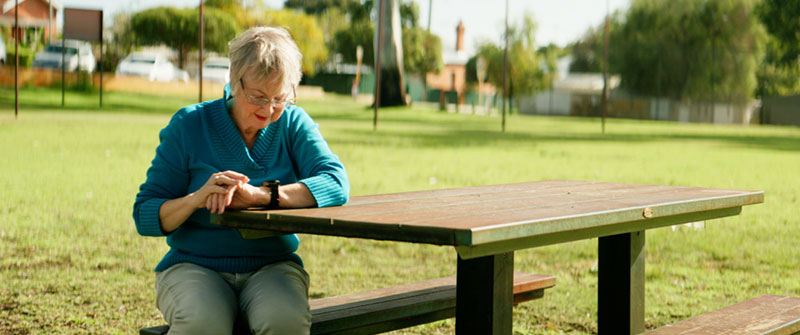
Yes. solosafe has an inbuilt SIM with access to the full Telstra network and works anywhere with coverage, in every Australian state — the garden, the shops, the golf course, a caravan park. GPS means our operators can tell emergency services exactly where you are, not just that you need help.

solosafe updates its location every 30 seconds, giving our Monitoring Centre accurate, current information so the right help can be sent as quickly as possible. Location data integrates with Google Maps.

A geofence is a virtual GPS boundary. The device updates its location continually, and if it moves outside the boundary you have set, an alert is generated automatically.

Our operator then contacts the family or carer straight away with the wearer's current location, and keeps updating it every 30 seconds until the person is found. Families supporting someone living with dementia, Alzheimer's or another cognitive condition often find this the most valuable feature on the device.

solosafe has fall detection. If a fall is detected and the wearer is not able to activate the request for assistance button, the device raises the alert to our Monitoring Centre on its own.

solosafe has a 24-hour battery and is charged daily, the same way you charge a mobile phone. Most people leave it on its charger overnight, and a full charge takes 2 to 3 hours. If the battery runs low, an SMS is sent to up to three nominated people — so a flat device does not go unnoticed by the family.

Not on Option 1. If you buy the device upfront for $199, monitoring is $30 per month with no minimum term and you can cancel at any time without penalty.

Option 2 has no upfront device cost and monitoring of $35 per month, with a 12-month minimum term.

In many cases, yes. solosafe may be funded through Support at Home (including the Assistive Technology and Home Modifications scheme), unspent Home Care Package funds, or the Commonwealth Home Support Programme. Silver Chain clients in WA can also access solosafe through their coordinator.

NDIS participants who are self-managed or plan-managed may be able to purchase solosafe as low-cost assistive technology, depending on their plan and assessed  needs. We are not a registered NDIS provider, so we are not able to supply participants whose plans are NDIA-managed.

Eligibility is determined by each program rather than by us. Call us on (08) 9422 1111 and we will help you work out which pathway applies.

A trained operator in our own Monitoring Centre in Western Australia. It is graded ASIAL Grade A1, the highest grade of alarm monitoring in Australia, and it is staffed 24 hours a day, every day of the year. Your call is not routed interstate or overseas.

solosafe goes with you. It uses the Telstra mobile network and GPS, so it works anywhere with coverage, and it is charged daily.

HomeSafe stays at home. It is a Base Station with a Pendant, covering the home and immediate surrounds, and its Pendant runs for up to two years without charging.

If the person mostly stays at home, or would find daily charging difficult, HomeSafe is usually the better fit. If they are out and about, choose solosafe. Call us on (08) 9422 1111 and we will help you decide.

Talk to our Perth team

Call (08) 9422 1111, or fill in the form below and we will call you back.